
Library
Books, sources, and voices around the world of the sacred mushroom.
The Library of The Church of the Holy Mushroom gathers texts, authors, references, documentaries, and other sources that stand near this world.
No movement comes from nowhere. Neither does The Church of the Holy Mushroom. At the margins of its scripture stand forerunners, thinkers, researchers, field writers, mycologists, visionary voices, and controversial books. Not everything in this Library is “official truth.” That is exactly what makes it valuable.
Some books give scientific context. Others open cultural or spiritual questions. Some titles are classic, others marginal, forgotten, or difficult to obtain. Together they form a wider reading world for those who want to go further than slogans or isolated images.
In this Library we want to make room for mycology and the study of nature, the cultural history of mushrooms, spirituality and ritual, consciousness and psychedelic literature, ecology, remediation, food, documentaries, essays, and field notes.
The Library is not a dead shelf. It is a living edge of the Church: a place where influences become visible, where questions deepen, and where readers can continue following their own trail.
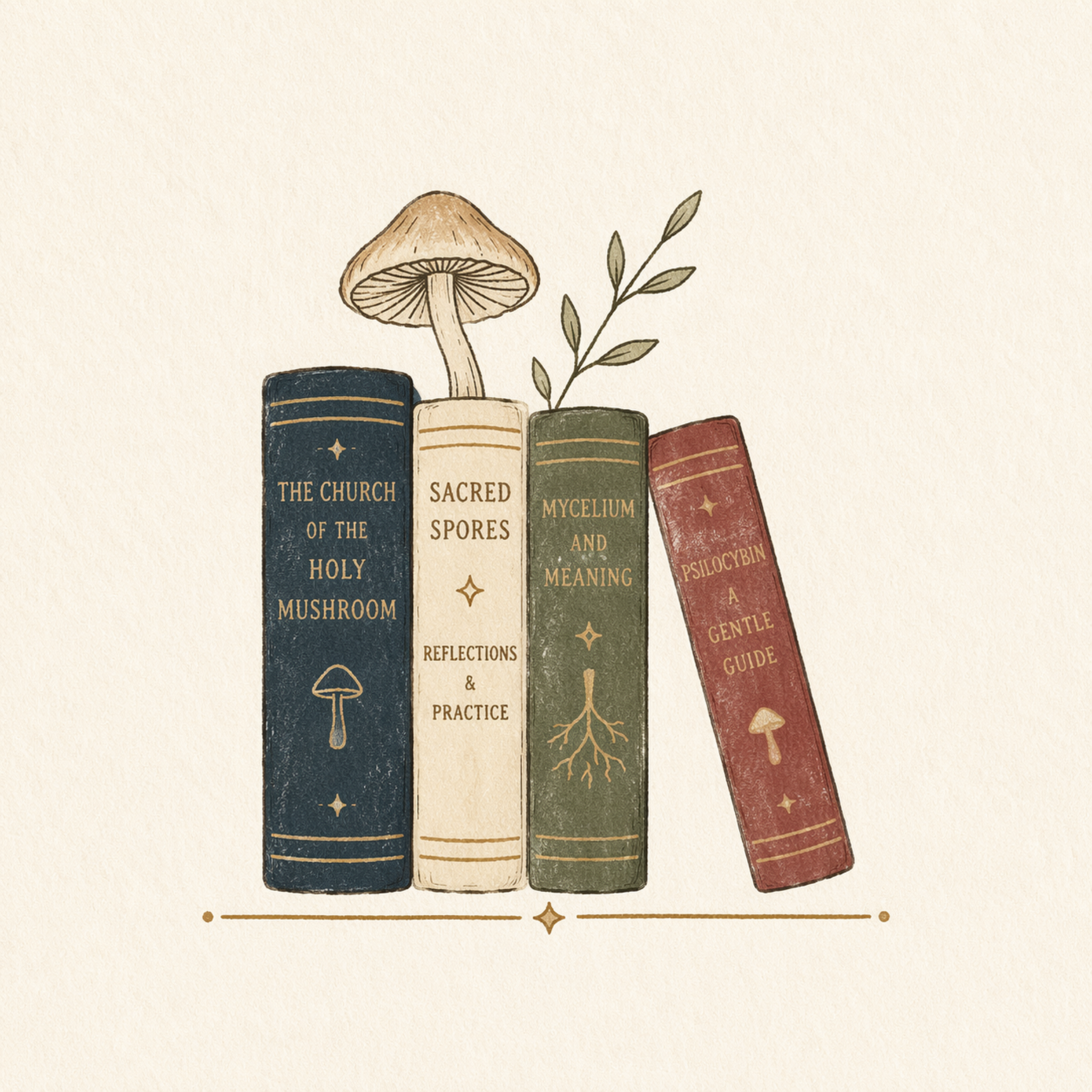
- first reading lists
- references and source notes
- short introductions to books
- documentaries and selected videos
- voices from the margins of the canon
What is the Library?
The Library is the Church’s editorial reading layer: a place for books, sources, essays, documentaries and reading routes around mushrooms, mycology, spirituality and culture. It is not a shop archive and not a dumping ground for links.
Does the Library sell books?
No. It opens reading routes and context; commerce can be added later only when a book is actually available through the Church.
Why does the Library matter?
It builds topical authority and shows the wider sources around the movement.
What belongs here?
Mycology, field writing, culture, ritual, spirituality, ecological repair and careful edge texts.